Enhanced/Dual Powered
Willem EPROM Programmer
User Guide
Main Board / Cables
Main Board PCB3.5
Main Board PCB4E

Main Board PCB5.0

Main Board PCB5.5C

|
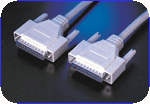
Parallel Data Cable (Printer extension cable, with male-female 25 pin connector, and pin to pin through) |
A-A type USB cable(for power) |
|
|
|
Optional Items:
|
ATMEL 89 Adapter |
ATMEL PLCC 44 Adapter |
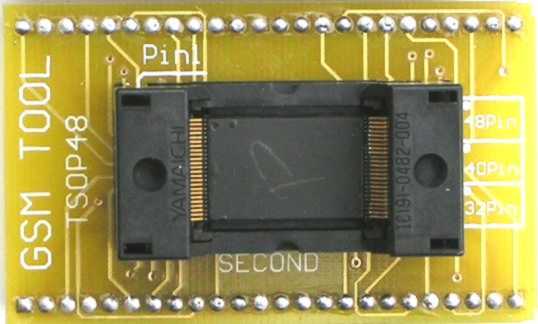
TSOP 48 Adapter |
|
|
|
|
|
FWH/HUB PLCC32Adapter |
PLCC32 Adapter |
SOIC Adapter(Simplified) |
|
On-Board |
On-Board |
|
|
AC or DC Power Adapter (9V or 12V, 200mA) |
SOIC Adapter(Professional) |
|
|
|
|
|
To perform an FRP (Factory Reset Protection) bypass on a , you can use the software's dedicated Xiaomi module. The Poco C40 typically runs on the JLQ JR510 chipset or a Mediatek variant depending on the region, which determines the specific connection mode required. Steps for Poco C40 FRP Bypass with DFT Pro Launch DFT Pro : Open the DFT PRO software on your PC and log in to your account. Select Module : Navigate to the tab at the top of the interface. Choose Function : Click on the sub-menu or the "Service" tab. Select Model : In the model list, search for and select Device Connection : Completely turn off the phone. Sideload Mode
Process Overview:
The Poco C40 typically runs Android 11 with MIUI 13. Because it uses a unique JLQ JR510 chipset rather than the more common Qualcomm or MediaTek processors, the FRP bypass process often requires specific modes: Poco C40 Frp Dft Pro
Hardware Installation & Configuration
|
Installation Steps
(Note: the LPT port of PC MUST set to ECP or ECP+EPP during BIOS setup. To enter the BIOS setting mode, you need press "Del" key or "F1" key during the computer selftest, which is the moment of computer just power up.)
Software Version To Use | |||
| |||
|
| |||
|
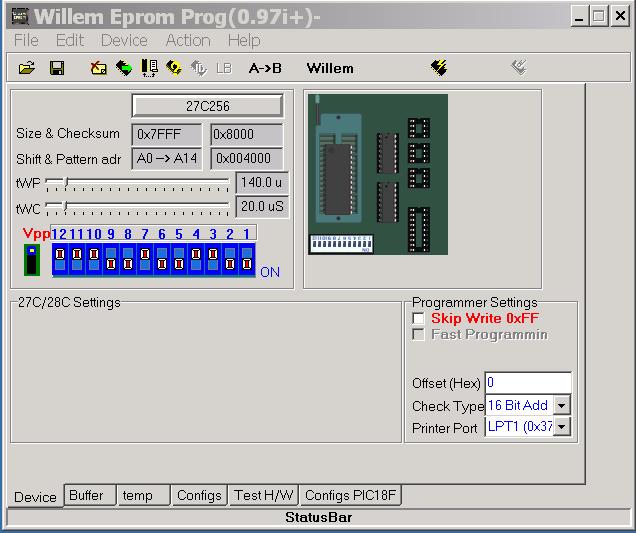
The software interface:
| |||
|
| |||
|
Hardware
Check
| |||
|
PCB3.5/PCB4E
PCB5.0
PCB5.5C
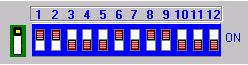
Note: the Vcc setting jumper only has effect when you are using AC adaptor as power source. For the USB power only 5V Vcc is available. For the PCB5.5C, set DIP steps: 1. press DIP Set button twice to check current DIP bit position. Then set it again for ON or OFF. 2. press DIP Bit shift button to shift the DIP bit position to where need to set. And then press DIP Set button twice to check current DIP bit position. Then set it again for ON or OFF. 3. Repeat those steps till all DIP bit ae set same as software indicated. For PCB5.5C voltage and Special chip selection: 1. Put back the safety jumper. 2. Press the voltage button and hold for 1 second, the voltage LED should move to next. Repeat till desired voltage LED light up. 3. Press the chip selection button and hold for 1 second, the chip LED should move to next. Repeat till desired LED light up. 4. Remove the safety jumper to lock the selected voltage and chip selection DIP Switch (PCB3.5, PCB5.0)
When programming one chip, follow the program prompt to set DIP switch .
|
To perform an FRP (Factory Reset Protection) bypass on a , you can use the software's dedicated Xiaomi module. The Poco C40 typically runs on the JLQ JR510 chipset or a Mediatek variant depending on the region, which determines the specific connection mode required. Steps for Poco C40 FRP Bypass with DFT Pro Launch DFT Pro : Open the DFT PRO software on your PC and log in to your account. Select Module : Navigate to the tab at the top of the interface. Choose Function : Click on the sub-menu or the "Service" tab. Select Model : In the model list, search for and select Device Connection : Completely turn off the phone. Sideload Mode
Process Overview:
The Poco C40 typically runs Android 11 with MIUI 13. Because it uses a unique JLQ JR510 chipset rather than the more common Qualcomm or MediaTek processors, the FRP bypass process often requires specific modes: