Gujarati Sexy Bhabhi Photojpg ((top)) [FAST] |


|
|
Gujarati Sexy Bhabhi Photojpg ((top)) [FAST]Gujarati Sexy Bhabhi Photojpg ((top)) [FAST]How to create a new label design for Automation using Avery Design Pro 5.0 Follow the steps below to create a new label to be used with Automation Suite using Avery Design Pro 5.0. Before you begin, make a new folder anywhere on your hard drive and name it anything you like. (e.g Template) (I put my new folder on the desktop) Using your windows explorer, go to C:\Router-CIM\Automation\Bin and copy the file called Label.dbf into the folder that you just created. While your there, make a copy of the original RouterCIM.zpd file that is in that folder also. Open Avery Design Pro.
At the Start Screen for Avery Design Pro, click ‘Design from Scratch’.
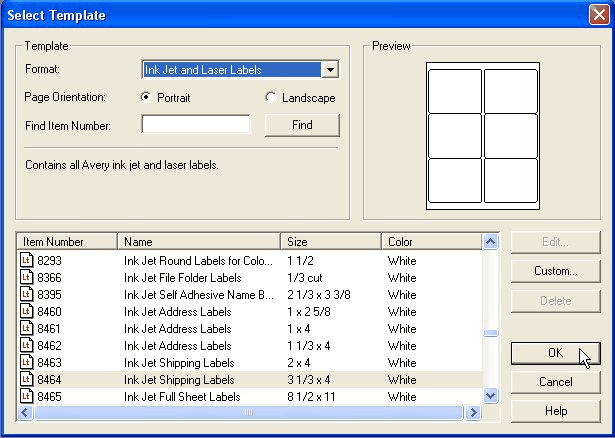
At the Select Template screen, choose the label you would like to use and click ‘OK’.
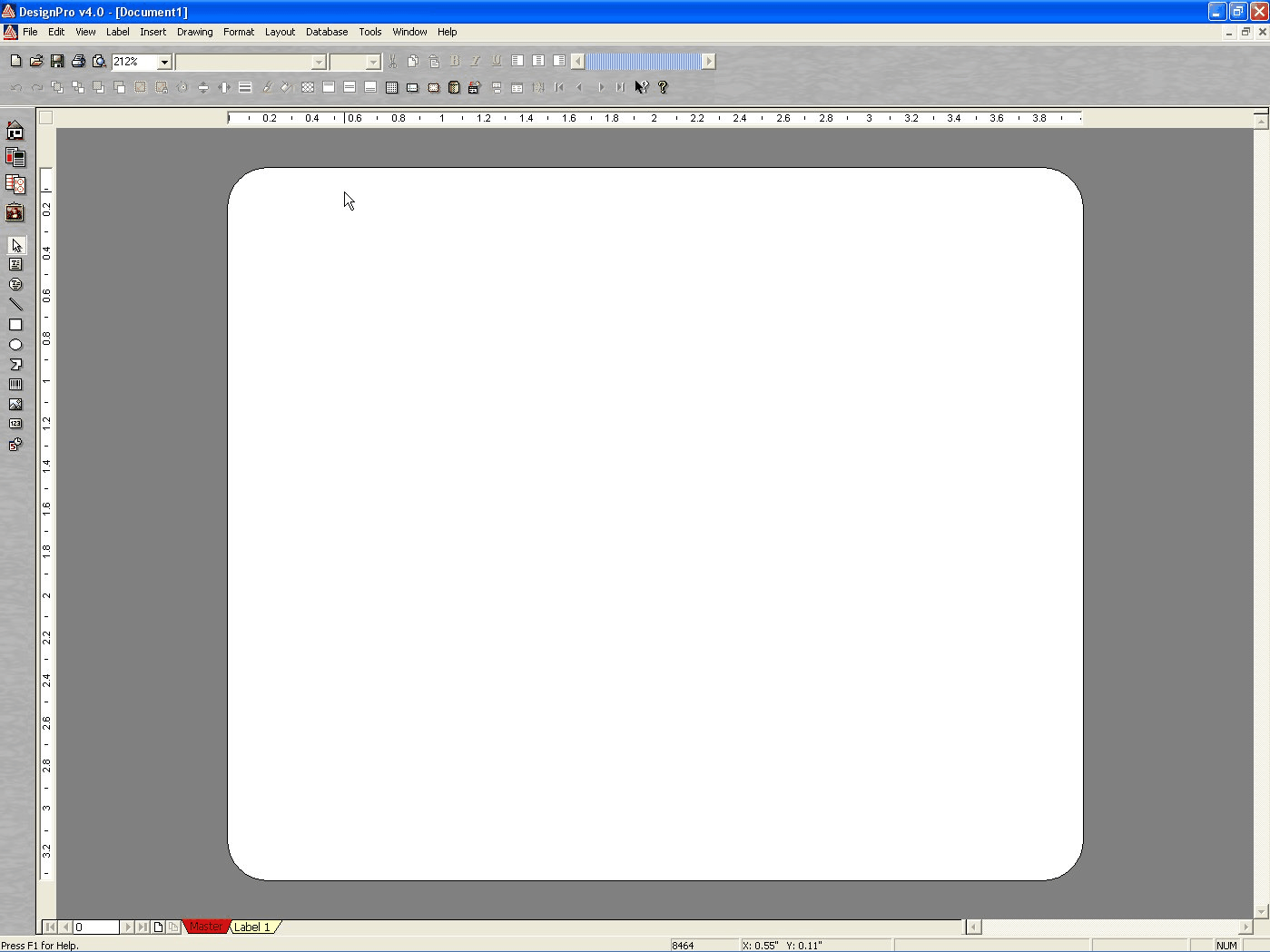
This screen shows actual label that you chose in the previous step.
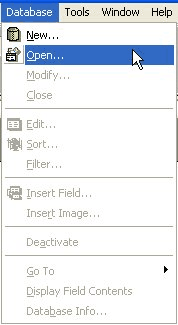
From the Database pull down menu, choose Open…
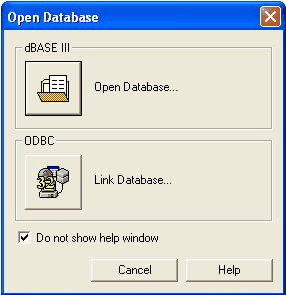
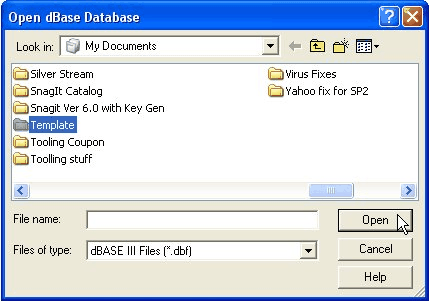
Click on the 'Open Database' icon. At this screen, go to the folder that you created at the very beginning that has the label.dbf
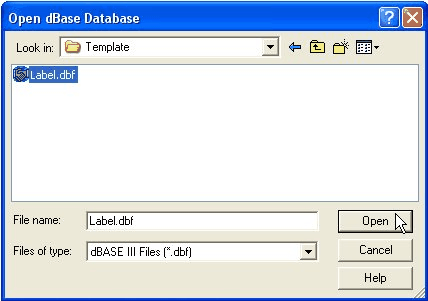
After opening the Template folder (or whatever you called it), select the label.dbf and click ‘Open’.
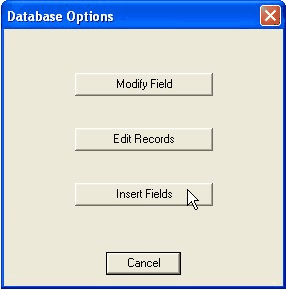
At the next screen, select ‘Insert Fields’.
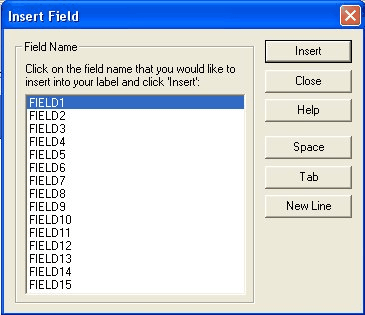
This will open the Insert Fields box.
The next few images will show Field descriptions.
Gujarati Sexy Bhabhi Photojpg ((top)) [FAST]The Indian family remains the primary social unit, characterized by deep emotional interdependence and a collective sense of responsibility. While the iconic joint family—where multiple generations share a kitchen and purse—is still the cultural ideal, rapid urbanization is shifting many households toward nuclear structures. 1. Traditional Family Structures and Values The Evening Ritual: Between 6:00 PM and 9:00 PM, middle-class Indian homes transform into study halls. The television is muted (or off). The mother sits beside the child, perhaps peeling oranges or cutting fruit, hovering like a helicopter. Some possible plot twists to add to this story include: gujarati sexy bhabhi photojpg Joint vs. Nuclear Families: Traditionally, families are patrilineal and patrilocal, meaning married sons stay with their parents while daughters join their husbands' households. Even in urban nuclear setups, emotional and financial ties to extended family remain nearly universal.
Today’s story: "Did you hear?" she whispers to your mother while chopping cabbage. "Mrs. Sharma's son ran away to Bangalore for love marriage!" Your mother gasps, but her hands keep kneading the dough. Information is currency. By evening, the entire apartment complex will know. The Indian family remains the primary social unit, Story of the Balcony (Kolkata): In a narrow lane of Kolkata, Mr. Banerjee sits on his balcony every evening at 5:00 PM. He waves at the butcher. He yells at the boy flying a kite who nearly crashes into his window. He watches the fish seller argue with his wife. He does not have a smartphone. His entertainment is the street. When a young couple moves in next door and fights loudly, he doesn't call the police. He sends over a plate of rosogollas (sweets) to “calm the atmosphere.” That is the Indian way: silence is solved with sugar. Lifestyle choices here are deeply seasonal. In the summer, life revolves around finding ways to stay cool—making mango pickles (aam ka achaar) or sipping on buttermilk. In the winter, the menu shifts to heavy greens like Sarson ka Saag and warming sweets like Gajar ka Halwa. Food is rarely just sustenance; it is a celebration of geography and lineage. Every family has a "secret recipe" passed down from a grandmother that serves as a culinary North Star. Rituals, Faith, and Togetherness The daughter comes back from college, throws her Photography in Gujarat is not just about capturing moments; it's an art form that tells stories of the state's heritage and its people. Gujarati photographers are known for their skill in portraying the state's culture, from the intricate patterns of traditional clothing to the grandeur of its historical monuments. The use of vibrant colors, especially during festivals like Navratri, adds a unique charm to the photographs.
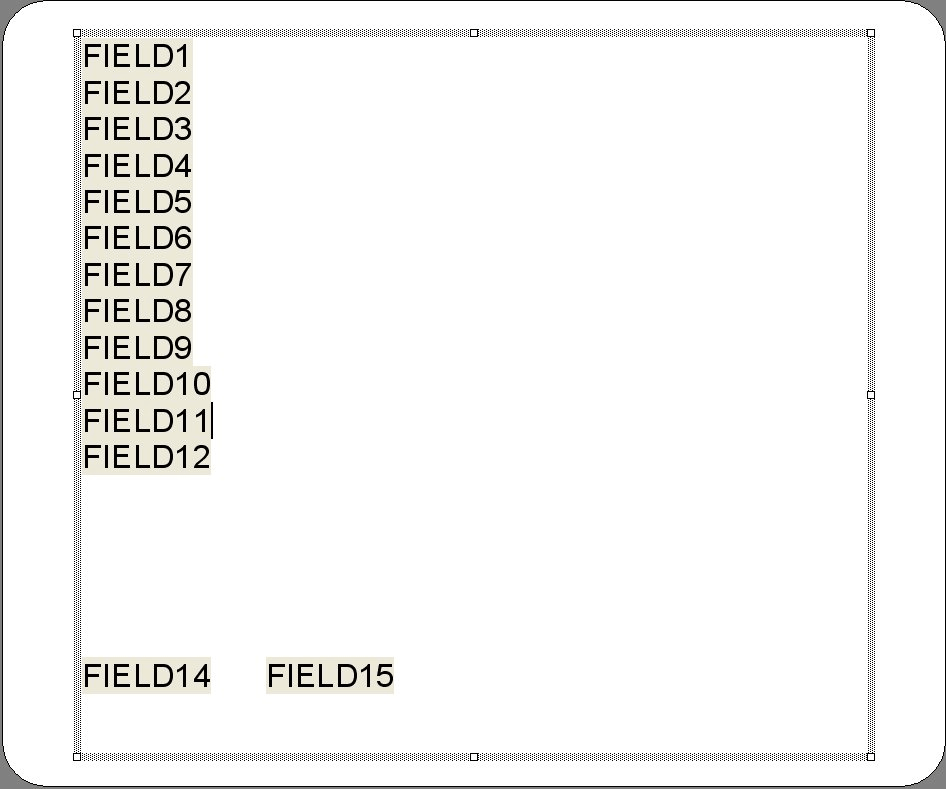
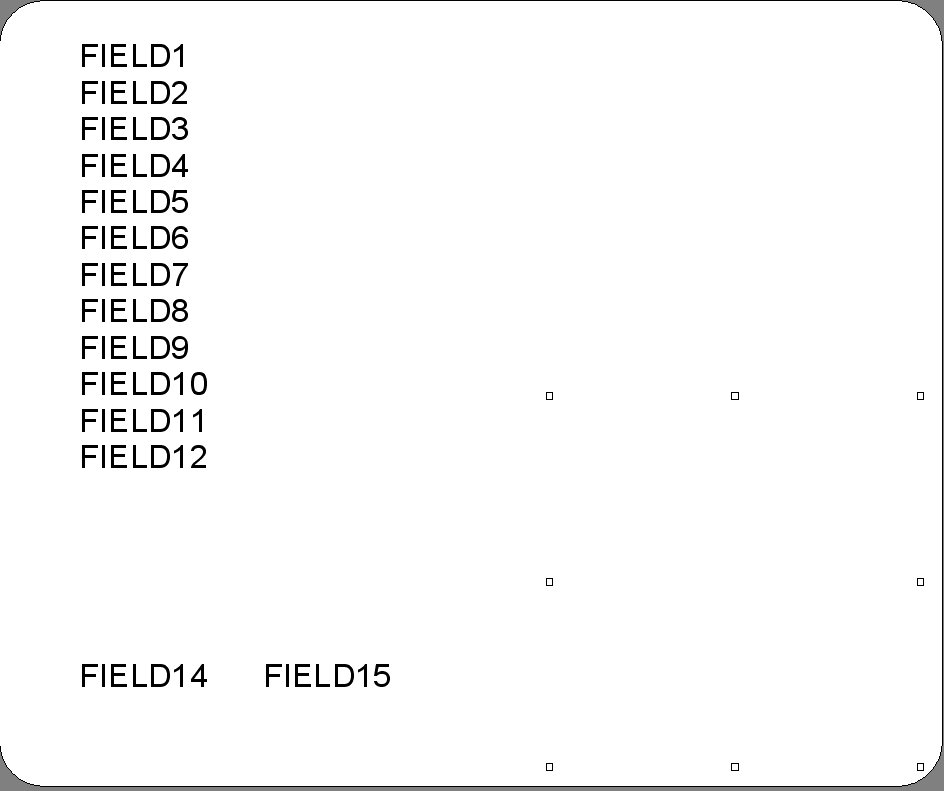
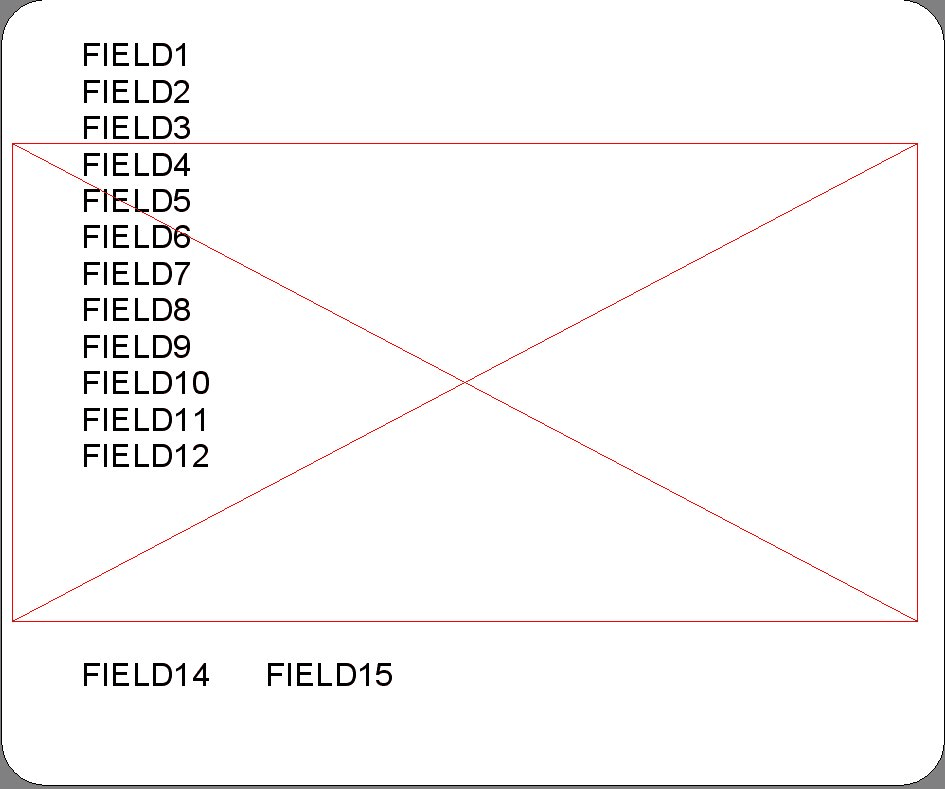
Using the Insert, Space, and New Line buttons, you can make the layout for you’re your new labels. Because of the size of this label, I was able to fit all of the fields on this label. Remember, the size of the label you choose dictates how much information (or how many fields) you can actually place on the label.
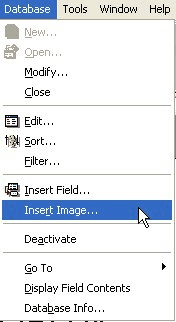
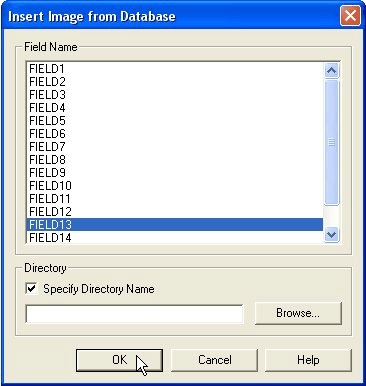
Notice the placement of fields 14 and 15. This will be important because placing it at the bottom of the label; these fields will be at the bottom of the Bar Code. Also notice that Field 13 is not on the label above. This is explained next… Field 13 is the graphic that can show the picture of your part on the label. To place a graphic on the label, from the Database pull down menu, choose ‘Insert Image’
Choose Field 13 and click 'OK'.
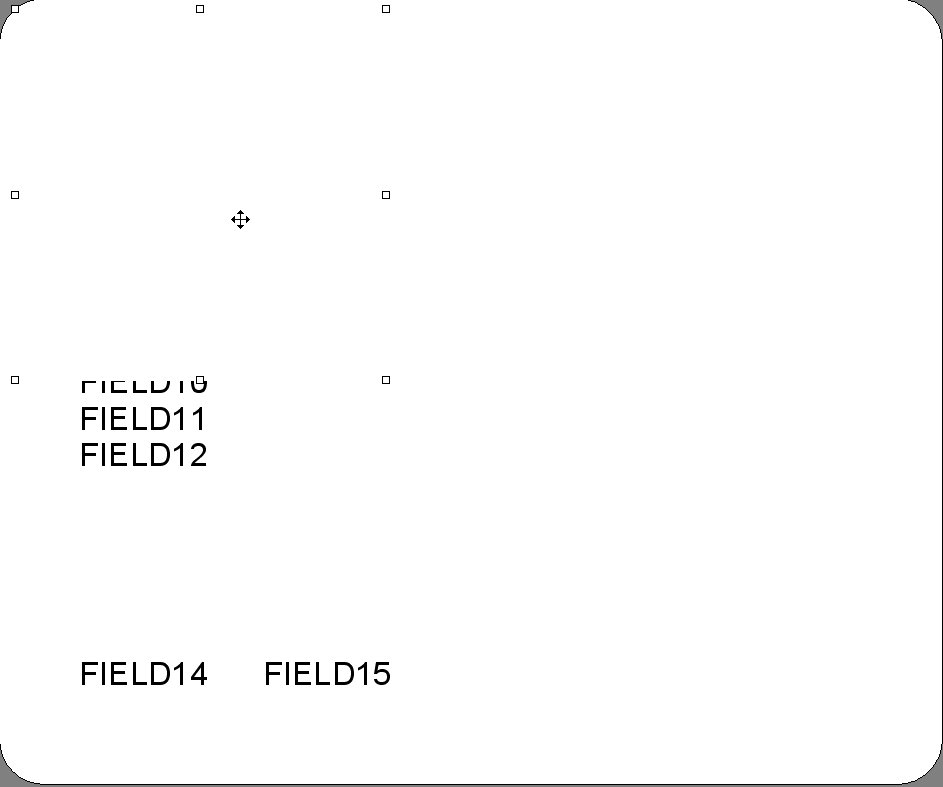
By default, the graphic is placed in the upper left corner of the label.
By grabbing and dragging, place the graphic box in the location you would like your graphic it be placed. For this example, I have placed the graphic in the lower right corner.
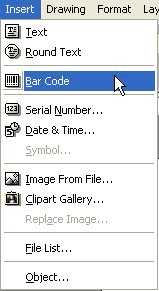
Field 15 is used to place a Bar Code graphic on the label. First, from the Insert pull down menu, choose ‘Bar Code’.
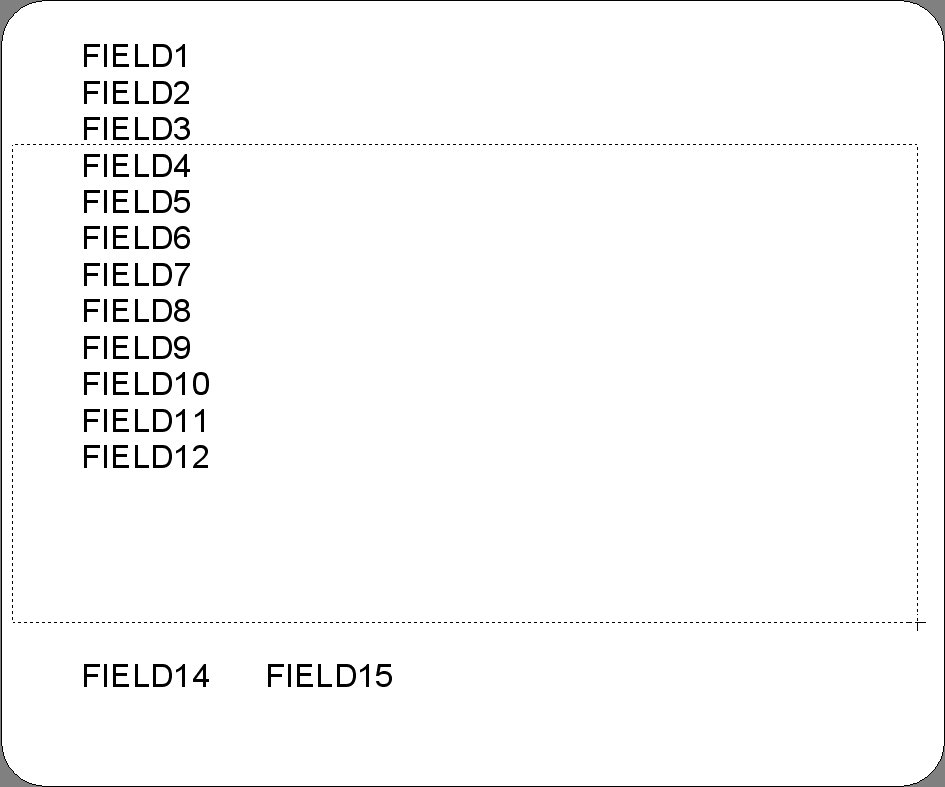
Your cursor will now change, drag from the upper left to the lower right to create a box.
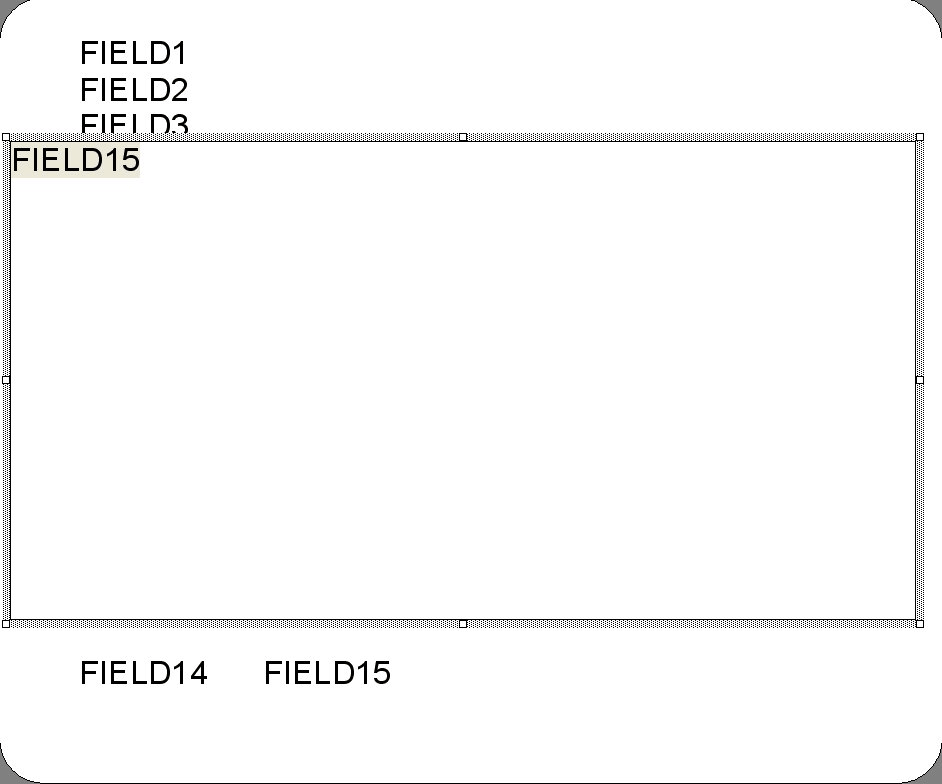
After the box is created, from the Database pull down menu, choose ‘Insert Fields’ and click on Field15 and click ‘Insert'.
When finished, your label should look like this.
NOTE: To prevent the bar code from becoming larger than the label and to have the name of the bar code shown, follow these steps: Highlight the bar code image and right-click on the dotted edge. Select 'Format Bar Code...' for the list.
This will open the Format Bar Code dialog box:
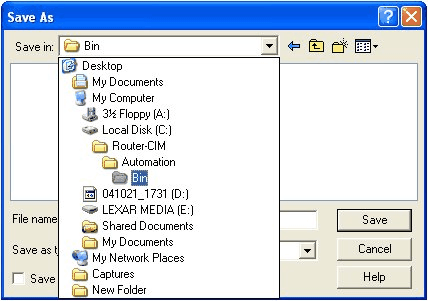
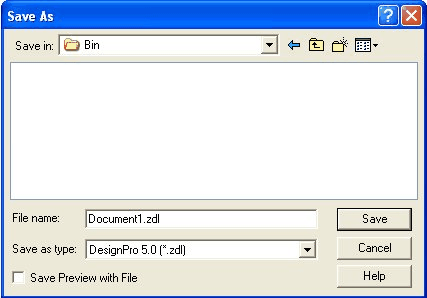
You want to make sure that 'Display Plaintext' and 'Adjust Size' are selected. Now it’s time to save your label. Choose 'Save’ or 'Save As’ from the file pull down menu. The Save in: should be set to C:\Router-CIM\Automation\Bin.
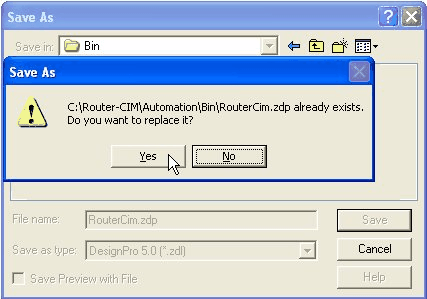
PLEASE NOTE THE FILE NAME: The only choice you have is to save it as a .zdl type at this point. In the File name: type in RouterCIM.zdp and click 'Save'. You should be asked if you would like to overwrite the file. Answer ‘Yes’
Copy the label.dbf file from the Template folder created in the beginning of the tutorial to the C:\Router-Cim\Automation\Bin folder and choose 'Yes' to overwrite the existing file. Then delete the copy of the label.dbf file in the Template folder you created. You are finished….run a job through Automation. When the job if finished and you open the Data Folder, you will see a RouterCIM.zpd file. Double-click on it. You will probably have to set the path for windows to open this type of file. The application to use would be the Labeler.exe found in C:\Program Files\Avery Dennison\DesignPro 5.0 Limited Edition folder. |